
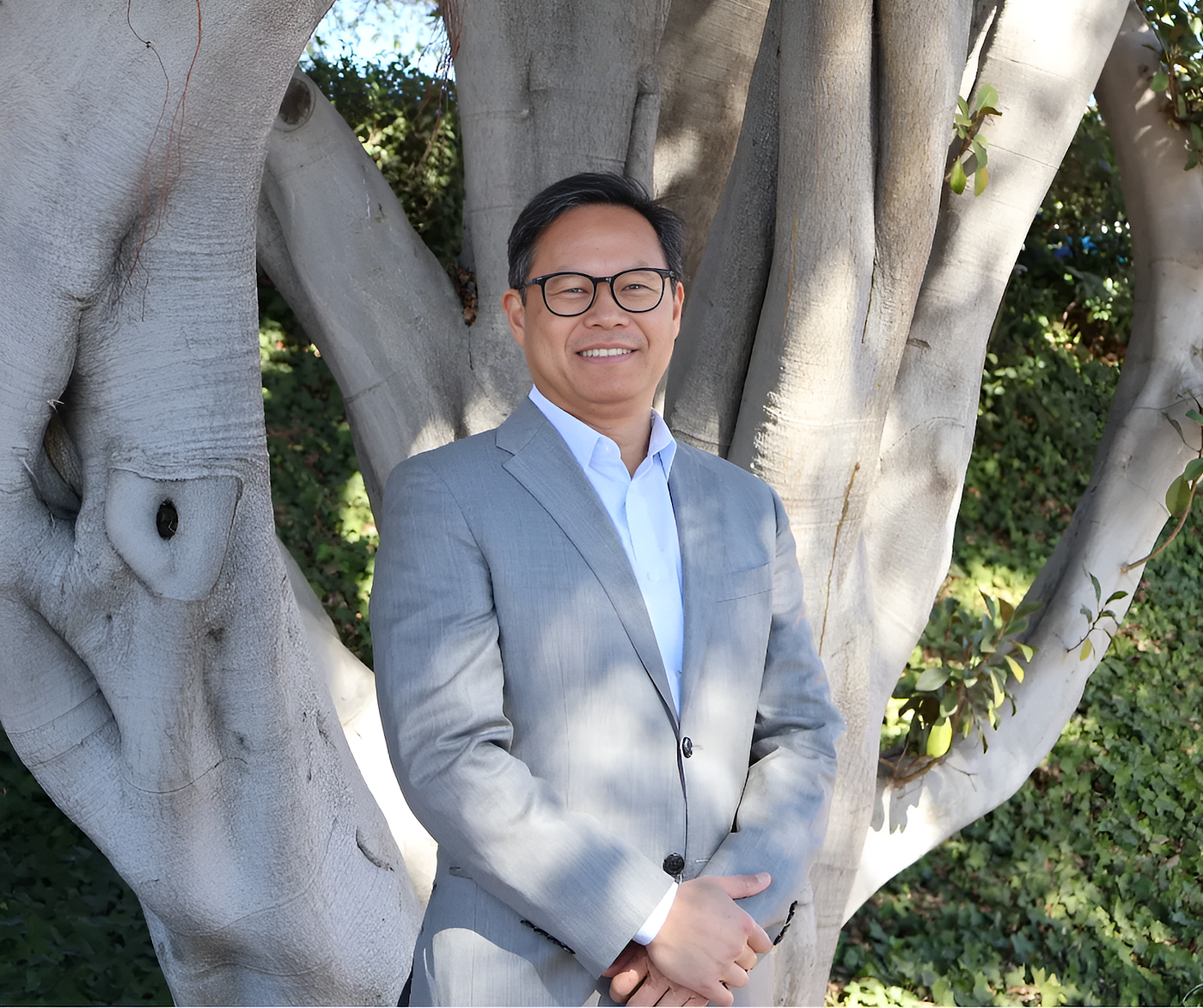
When Louie Nguyen, CFA became CEO of SAY San Diego in February 2025, he wasn’t simply taking on a new role. He was stepping into an entirely new sector.
After a career in investing and finance, most recently as Chief Investment Officer of an impact investing firm, Nguyen found himself drawn to something different: the opportunity to move closer to the work itself and the communities being served in a nonprofit setting.
More than a year later in the role, his experience offers valuable insights for executives considering a similar move from the for-profit world into nonprofit leadership.
The idea of becoming a CEO had been on Nguyen’s mind for some time. A leadership program at Stanford exposed him to founders and corporate chief executives whose entrepreneurial energy reignited his own ambitions. At the same time, he found himself questioning the distance between investment decisions and community impact.
“I felt like I was getting further and further away from what was actually happening in what I call the ‘side streets’ of America,” he recalls.
When the opportunity at SAY San Diego emerged, it felt uniquely aligned. The organization was looking for a leader who could bring innovation, business discipline, and experience working at the intersection of traditional nonprofit and social impact. Nguyen saw an opportunity to combine those strengths with meaningful community work.
Like many executives entering the nonprofit sector, Nguyen anticipated a learning curve. What surprised him was the depth and complexity of the work. “I knew there would be a learning curve,” he says. “I didn’t realize how steep and how long that learning ride would be. Imagine sitting in a rollercoaster as it is climbing, then it enters a tunnel, twisting and turning while still climbing, in pitch darkness.”
Managing contracts with large public agencies, navigating funding structures, understanding regulatory requirements, and balancing multiple stakeholder groups requires a level of complexity that often goes unseen from the outside.
The pace of decision-making was also different. In the private sector, leaders often move quickly, making decisions with incomplete information and adjusting along the way. In nonprofit organizations, Nguyen found that successful leadership requires more consensus-building, more stakeholder engagement, and more investment in time spent bringing people along.
Many of Nguyen’s core leadership skills translate effectively. Relationship building, networking, strategic thinking, and stakeholder management remain essential regardless of sector.
He quickly learned that language matters. Concepts like return on investment, margins, and market share may resonate in the corporate world, but they are not what motivate high-performing nonprofit professionals like those at SAY.
Instead, he discovered that many employees are driven by what he describes as a “psychic dividend”—the fulfillment that comes from seeing their work directly improve lives. That perspective has reshaped how he thinks about leadership, communication, and organizational culture.
One of the more nuanced challenges of the role was succeeding a respected long-term CEO.
SAY San Diego is a 55-year-old organization with deep roots in the community, a strong reputation, and a dedicated workforce. Nguyen understood that meaningful change would require first understanding the culture he was inheriting.
He began with an extensive listening tour, meeting with board members, senior leaders, managers, and staff across the organization. His goal was to practice deep listening and understand what made the organization successful and where opportunities existed to evolve. Deep listening often involves multiple listening sessions with the same individual about the same topic. The same conversation can land each time differently.
That experience reinforced an important leadership lesson: introducing change can be more challenging in a healthy organization than in one facing obvious difficulties.
“When things are working well, people naturally ask, ‘Why change?'”
For Nguyen, the answer lies in preparing for the future. Funding landscapes shift, community needs evolve, and organizations must continue adapting even when they are performing well.
Another unexpected aspect of nonprofit leadership was board management. Nonprofit CEOs work closely with governing boards that play critical roles in oversight, strategy, and fundraising. The board is often composed of individuals from the government, nonprofit, and private sector, thus creating a mosaic of lived experiences.
Nguyen describes nonprofit boards as living entities with their own histories, personalities, ambitions, and institutional memory.
Learning how to engage, activate, and support board members—particularly around fundraising—has been one of the most valuable aspects of his first year as CEO.
As more professionals explore opportunities in purpose-driven organizations, Nguyen encourages them to think beyond compensation.
“Look at the totality of the reward,” he advises.
While nonprofit leadership may involve financial tradeoffs, he believes the opportunity to create impact, grow as a leader, and live a purpose-driven life offers significant returns.
His second piece of advice is equally important: come in humble.
Executives entering the nonprofit sector may be tempted to arrive with ideas about efficiency, innovation, and operational improvement. Those contributions can be valuable, but Nguyen believes the most successful leaders recognize how much they have to learn.
“Nonprofits are already solving incredibly complex problems. There is a lot that leaders from the private sector can contribute, but there is also a tremendous amount they can learn.”
More than a year into the role, one thing is clear: the move from investment to nonprofit leadership was never simply about changing industries.
It was about finding a different way to create deeper impact.